
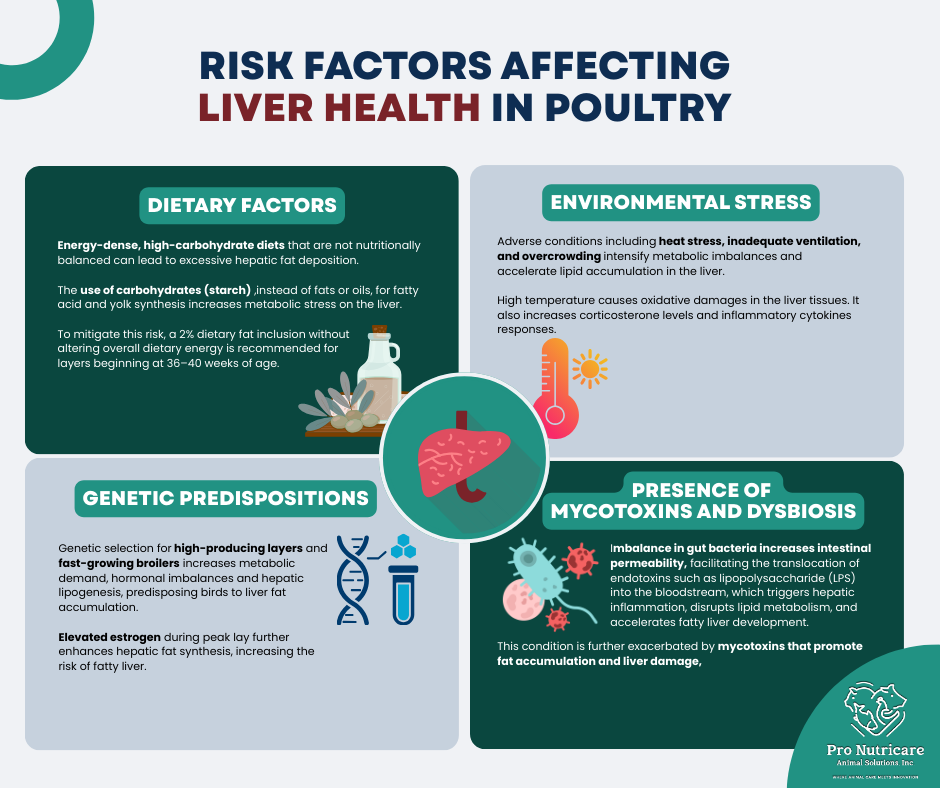
Risk Factors Affecting Liver Health in Poultry
The liver is one of the most vital organs in poultry production. It plays a central role in metabolism, nutrient storage, detoxification, and overall performance. When liver health declines, productivity, egg quality, growth rate, and flock profitability are directly affected.
Understanding the major risk factors that compromise liver health allows producers to implement preventive strategies early. Below are the key contributors to liver problems in poultry—and what can be done about them.
Dietary Factors
Energy-dense, high carbohydrate diets that are not nutritionally balanced can lead to excessive hepatic fat deposition.
The use of carbohydrates (starch), instead of fats or oils, for fatty acid and yolk synthesis increases metabolic stress on the liver.
To mitigate this risk, a 2% dietary fat inclusion without altering overall dietary energy is recommended for layers beginning at 36-40 weeks of age.
Environmental Stress
Adverse conditions including heat stress, inadequate ventilation, and overcrowding intensify metabolic imbalances and accelerate lipid accumulation in the liver.
High temperature causes oxidative damages in the liver tissues. It also increases Corticosterone levels and inflammatory Cytokines responses.
Genetic Predispositions
Genetic selection for high-producing layers and fast growing broilers increases metabolic demand, hormonal imbalances and hepatic lipogenesis, predisposing birds to liver fat accumulation.
Elevated estrogen during peak lay further enhances hepatic fat synthesis, increasing the risk of fatty liver.
Presence of Mycotoxins and Dysbiosis
Imbalance in gut bacteria increases intestinal permeability, facilitating the translocation of endotoxins such as Lipopolysaccharide (LPS) into the bloodstream, which triggers hepatic inflammation, disrupts lipid metabolism, and accelerates fatty liver development.
This condition is further exacerbated by mycotoxins that promote fat accumulation and liver damage.
for more info visit:
Various naturally occurring factors can impact liver health in poultry, including diet composition, heat stress, high-producing layers, fast-growing broilers, microbiota imbalances, and the presence of mycotoxins.
While these factors are inevitable, protecting the liver is essential. Integrating liver-support solutions into your poultry program can improve flock performance, optimize production, and increase profitability.
For producers seeking targeted nutritional solutions and liver-support strategies, consulting specialists such as Pro Nutricare Animal Solutions Inc. can help optimize flock health through science-based approaches and maximize your poultry farm operation.